

How Much Does Video Production Cost in Mexico?
RESOURCE GUIDE
Planning a video production in Mexico and wondering what it might cost?
It's one of the first questions most companies and production teams ask—and one of the hardest to answer without understanding the project.
A simple executive interview and a multi-city commercial production may both technically be considered "video production," but their budgets can be completely different.
The number of shoot days, crew size, equipment, locations, travel, talent, production complexity, and post-production requirements can all significantly affect the final cost.
So rather than giving you one number that may have little relevance to your project, this guide explains what actually determines the cost of video production in Mexico, what a production budget typically includes, and how different types of projects can vary in scale.
IN THIS GUIDE
1. What Does Video Production in Mexico Actually Cost?
2. The Main Factors That Affect Your Budget
3. Pre-Production Costs
4. Production Crew and Shoot Days
5. Camera, Lighting, and Equipment
6. Locations, Travel, and Logistics
7. Talent, Permits, and Additional Requirements
8. Post-Production and Deliverables
9. Example Production Scenarios
10. How to Get More Value From Your Production Budget
11. How to Request an Accurate Production Quote
1. So, How Much Does Video Production Cost in Mexico?
The short answer is:
It depends on what you're producing.
A focused one-day interview shoot may require a relatively small crew, limited equipment, and straightforward logistics.
A manufacturing production involving multiple facilities may require several shoot days, additional cameras, drone coverage, production management, travel, and extensive post-production.
A commercial campaign may involve a director, larger crew, casting, locations, art direction, wardrobe, specialized equipment, multiple shoot days, and a significantly more complex production structure.
Current Mexican market references illustrate just how wide the range can be: recent 2026 estimates for corporate and branded productions span from relatively lean five-figure MXN projects to productions costing several hundred thousand pesos or more, depending heavily on scale and complexity. Those ranges should be treated as orientation—not as fixed pricing for any particular production.
For that reason, we recommend thinking about your budget in terms of production scenarios rather than a single “price per video.”
The most important question is not:
How much does a video cost?
It's:
What resources are required to create the video you need?
2. The Main Factors That Affect Your Budget
Most production budgets are influenced by a relatively consistent group of variables.
The biggest ones are usually:
- Number of Shoot Days
More production days generally mean additional crew, equipment, transportation, meals, locations, and production support.
A project that can be completed in one well-planned day may have a very different budget from a production spread across five locations over an entire week.
- Crew Size
A small interview production may only require a compact team.
A larger production may involve:
- Producer
- Director
- Director of Photography
- Camera Operators
- Audio
- Gaffer
- Grip
- Production Assistants
- Drone Crew
- Hair and Makeup
- Art Department
- Additional Production Support
The goal isn't to hire the biggest crew possible.
It's to build the right crew for the production.
- Equipment
The equipment package may include:
- Cameras and lenses
- Lighting
- Grip
- Audio
- Teleprompters
- Monitors
- Drones
- Specialty equipment
- Streaming equipment
The technical requirements of the project can significantly affect the production budget.
- Locations
Filming at your own office or facility is very different from renting multiple locations.
Depending on the project, costs may involve:
- Location fees
- Location management
- Permits
- Parking
- Security
- Site preparation
- Additional insurance or requirements
- Travel and Logistics
For multi-city productions, costs may include:
- Flights
- Hotels
- Ground transportation
- Equipment transportation
- Per diems
- Crew travel days
The geographic design of a production can have a major effect on the final budget. Recent production-cost analyses specifically highlight domestic travel, local crew availability, equipment movement, and location complexity as important budget variables for shoots across Mexico.
- Talent
If your production involves actors, presenters, models, or other on-camera talent, the budget may include both performance fees and applicable usage rights.
- Post-Production
The cost doesn't stop when production wraps.
Depending on the project, post-production may include:
- Editing
- Color correction
- Sound design
- Music licensing
- Motion graphics
- Animation
- Subtitles
- Translation
- Multiple language versions
- Social edits
- Different aspect ratios
- Additional versions
A project with one final edit will be structured differently from a campaign requiring 20 individual deliverables.
3. Understanding the Three Main Stages of a Production Budget
Most professional video productions can be divided into three broad stages:
Pre-Production
This is where the project is planned.
Depending on the scope, it may include:
- Creative development
- Script development
- Production planning
- Budgeting
- Scheduling
- Location scouting
- Casting
- Crew coordination
- Equipment planning
- Permit coordination
Good pre-production can often reduce unnecessary costs later by identifying logistical or creative issues before the shoot begins.
Production
This is the actual filming phase.
It may include:
- Crew
- Equipment
- Locations
- Transportation
- Talent
- Production management
- Catering
- Safety requirements
- Drone operations
- Additional vendors
For many projects, production day expenses represent a significant portion of the overall budget because multiple resources are operating simultaneously.
Post-Production
This is where the captured material becomes finished content.
Depending on the project, this may involve:
- Editing
- Color
- Audio
- Graphics
- Animation
- Music
- Review rounds
- Mastering
- Versioning
The complexity of the final deliverables can sometimes affect the budget just as much as the complexity of the shoot itself.
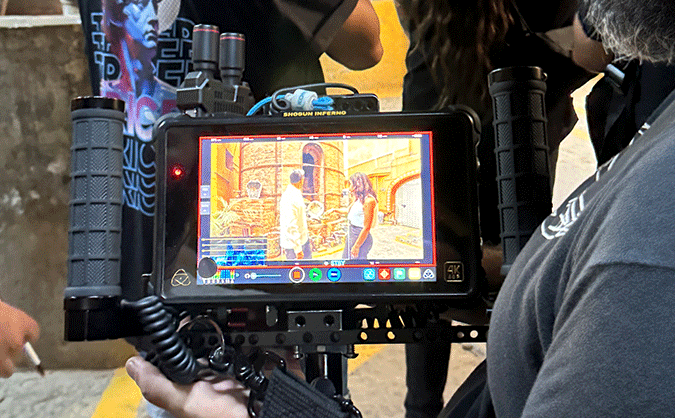
4. Production Crew and Shoot Days
One of the fastest ways a production budget changes is through time and people.
Let's compare two hypothetical projects.
Scenario A: Executive Interview
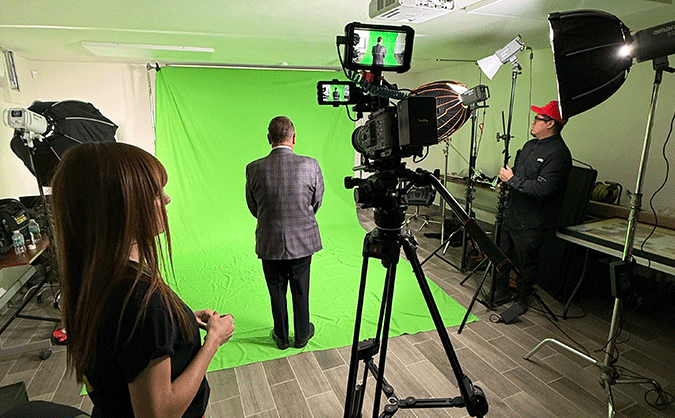
A company needs to film one executive interview at its office.
The production might involve:
- One shoot day
- Compact camera package
- Lighting
- Professional audio
- Small production crew
- Simple location logistics
This is a focused production.
Scenario B: Manufacturing Content Campaign
A company wants to capture:
- Facility footage
- Executive interviews
- Employee content
- Drone footage
- Photography
- Social content
Across two facilities in different cities.
The project may require:
- Multiple shoot days
- Larger crew
- Multiple cameras
- Drone team
- Travel
- Production coordination
- Equipment across locations
- More extensive post-production
Even if both projects ultimately produce a "corporate video," they are fundamentally different productions.
The number of minutes in the final video is not usually the best way to estimate production cost.
A 60-second commercial can require significantly more resources than a 10-minute interview.
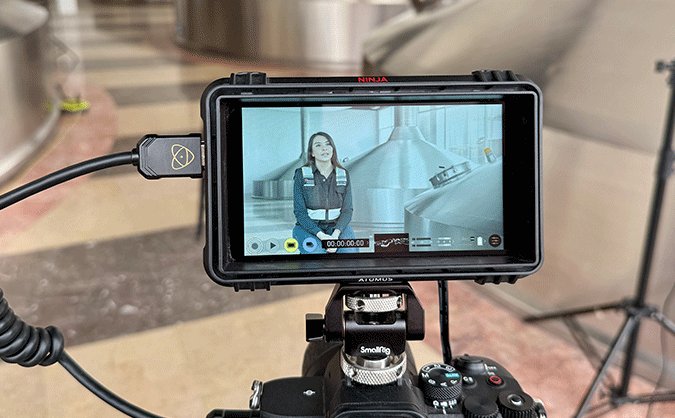
5. Camera, Lighting, and Equipment Costs
Professional equipment is usually planned around the production—not selected simply because it is the most expensive option available.
A production may require:
Basic Professional Package
For example:
- Camera
- Lenses
- Tripod
- Basic lighting
- Audio
Expanded Production Package
Potentially including:
- Multiple cameras
- Cinema lenses
- Larger lighting package
- Grip
- Monitors
- Teleprompter
- Drone
- Specialty movement equipment
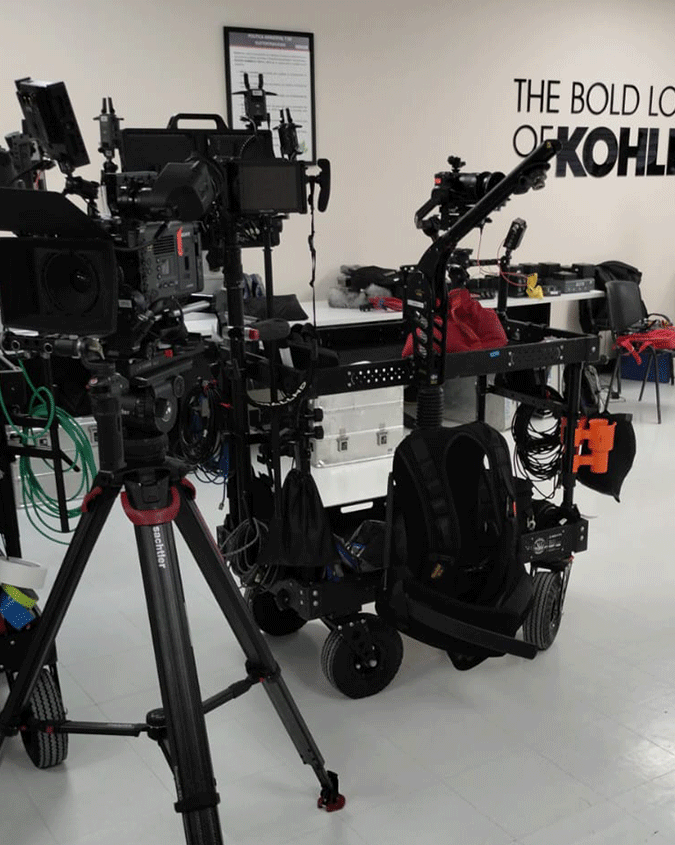
Specialized Production Package
For more complex productions:
- High-end cinema systems
- Specialty lenses
- Large-scale lighting
- Generators
- Advanced grip
- Specialty camera movement
- Streaming infrastructure
The right question is:
What does this production actually need?
Not:
What's the most expensive camera available?
6. Locations, Travel, and Logistics
This is an area where budgets can change quickly.
A production based entirely in one office or facility may have relatively simple logistics.
A project involving:
Monterrey → Querétaro → Mexico City
is a different situation.
Potential costs may include:
- Flights
- Hotels
- Vans and local transportation
- Equipment transportation
- Travel days
- Local crew
- Additional production coordination
This doesn't necessarily mean multi-city productions are inefficient.
In many cases, they can be planned strategically by combining:
- A traveling core team
- Local crew in each city
- Locally sourced equipment
- Centralized production management
The key is to plan the production geographically—not just creatively.
7. Talent, Permits, and Other Production Requirements
Some of the most important budget variables are also the easiest to overlook early in the planning process.
Talent
Professional actors, presenters, and models may involve:
- Casting
- Shoot-day fees
- Wardrobe and fittings
- Travel
- Usage rights
Permits and Authorizations
Not every production requires the same level of permit coordination.
Requirements can vary based on:
- Public or private property
- Location
- Production scale
- Equipment
- Drone operations
- Public impact
- Restricted or protected areas
Official Mexican film and local production authorities maintain permitting and production requirements for different types of activities and locations, reinforcing why this should be evaluated on a project-by-project basis rather than treated as a fixed line item.
Specialized Requirements
Some projects may also require:
- Safety coordination
- Security
- Special access
- Medical support
- Industrial safety compliance
- Specialized operators
- Additional insurance
These requirements can be essential for the production—but they should ideally be identified before the budget is finalized.
8. Post-Production and Deliverables
One of the biggest mistakes in budgeting is focusing entirely on the shoot.
The production day captures the material.
Post-production turns that material into usable content.
Consider the difference between:
One Video
- One primary edit
- One format
- Basic graphics
- Standard review process
And:
A Content Library
- One primary video
- Five executive interview edits
- Ten short social clips
- Vertical versions
- Subtitles
- Multiple languages
- Photography
- Raw footage organization
The second project may come from the same shoot—but the post-production scope is completely different.
This is why defining deliverables early is so important.
9. Example Video Production Scenarios
Rather than publishing a fixed price list, I think these examples provide a much more realistic way to think about production scale.
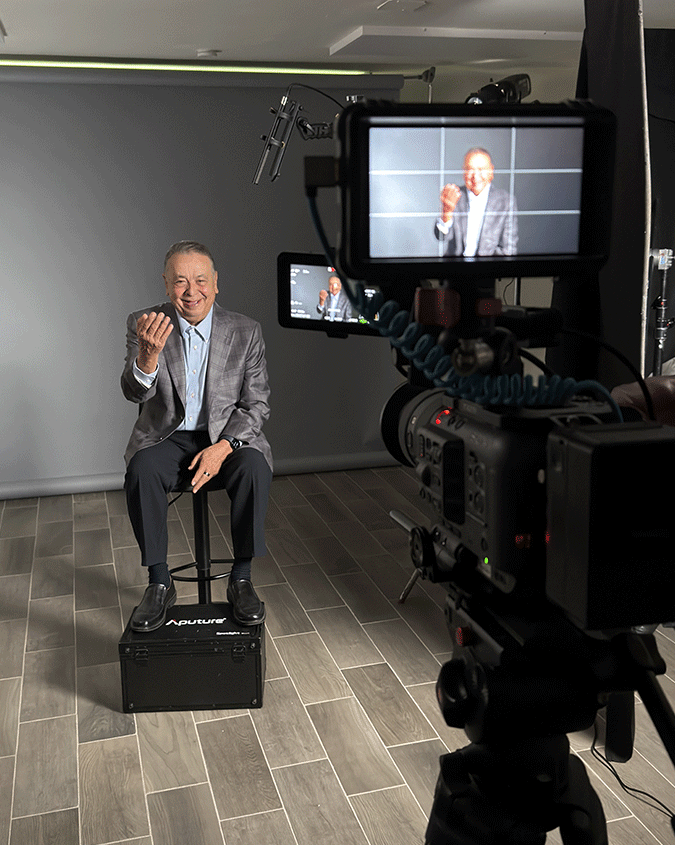
A Focused One-Day Interview Production
Typical characteristics:
- One location
- One or two interview subjects
- One shoot day
- Compact professional crew
- Camera, lighting, and audio
- Limited travel
- Straightforward post-production
This type of project generally sits toward the more accessible end of professional production budgets.
A Corporate or Manufacturing Production
Typical characteristics:
- One or multiple facilities
- Interviews and B-roll
- Two or more shoot days
- Larger crew
- Expanded equipment package
- Possible drone coverage
- Production coordination
- Multiple deliverables
The budget increases because both the production scope and logistical requirements increase.
A Multi-City Content Production
Typical characteristics:
- Multiple cities
- Travel and accommodations
- Local and/or traveling crew
- Equipment coordination
- Centralized production management
- Multiple shoot days
- Media management
Here, the production strategy can have a major impact on cost.
A well-planned multi-city shoot may be significantly more efficient than treating every location as an independent production.
A Commercial or Brand Campaign
Typical characteristics:
- Creative development
- Director
- Larger crew
- Casting
- Locations
- Art direction
- Wardrobe
- Specialized equipment
- Multiple shoot days
- Extensive post-production
These productions can range widely and may involve substantially larger budgets.
10. How to Get More Value From Your Production Budget
Reducing the budget isn't always the same as improving efficiency.
Sometimes, the best way to maximize a production budget is to get more from the time and resources already being invested.
For example:
Instead of flying a crew to a manufacturing facility to capture one corporate video, consider whether the same production can also capture:
- Executive interviews
- Employee stories
- Customer testimonials
- Facility B-roll
- Drone footage
- Photography
- Social media content
The additional planning may increase the production scope—but it can significantly improve the overall value of the trip.
This is one of the biggest advantages of thinking about production as a content capture opportunity, rather than simply producing one individual video.
Another way to improve efficiency is to plan locations, schedules, and deliverables early.
A rushed production often creates additional costs through:
- Last-minute crew bookings
- Equipment availability issues
- Unnecessary travel
- Additional shoot days
- Production delays
- Missed footage
- Re-shoots
The best budget-saving strategy is often simply:
Plan early and capture strategically.
11. How to Get an Accurate Video Production Quote
If you're requesting a quote for a production in Mexico, you don't need to have every detail figured out.
But the more information you can provide, the more accurately a production team can understand your needs.
A useful initial brief might include:
What are you producing?
A corporate video? Executive interviews? Customer testimonials? A commercial? Event content?
Where are you filming?
One city? Multiple locations? Specific facilities?
When do you want to shoot?
Even an approximate timeline is helpful.
How many shoot days do you expect?
If you're unsure, a production partner can help estimate this.
What support do you need?
Do you already have a director and creative concept?
Or do you need complete production support?
What deliverables are required?
One finished video? Multiple edits? Raw footage? Photography?
What is your approximate budget range?
You don't need to disclose a perfect number.
But having a realistic range can help the production team recommend an approach that matches your resources instead of building a plan that has no chance of being approved.
THE BOTTOM LINE
The Cost of Video Production Depends on the Production.
There is no universal price for video production in Mexico.
A compact one-day interview shoot, a multi-day manufacturing production, and a large commercial campaign may all require completely different levels of planning, crew, equipment, logistics, and post-production.
The best way to understand your potential budget is to define:
- What you need to produce
- Where you need to film
- How much production support you need
- What resources the production requires
- What you need to deliver after the shoot
From there, a realistic production budget can be built around the actual scope of your project.
Frequently Asked Questions
Is video production in Mexico less expensive than in the United States?
In many cases, working with local crew and equipment can be cost-efficient compared with bringing an entire production team and equipment package from abroad. However, Mexico should not be treated as a single fixed-cost production market: city, production scale, travel, talent, locations, and technical requirements can all materially change the budget.
What is usually included in a video production quote?
Depending on the project, a quote may include pre-production, crew, equipment, locations, transportation, talent, production management, permits, post-production, and final deliverables.
The exact scope should be clearly defined so you understand what is—and isn't—included.
Is it cheaper to film everything in one city?
Not always, but consolidating locations can reduce travel and logistical costs.
The best approach depends on where your people, facilities, customers, or required locations are actually located.
Can I work with a fixed production budget?
Yes. If you have a defined budget range, a production plan can often be designed around it.
This may involve adjusting:
• Number of shoot days
• Crew size
• Equipment
• Locations
• Travel
• Deliverables
The goal is to prioritize the elements that have the greatest impact on the final result.
Can you give me an estimate before the full production brief is complete?
Yes. An initial estimate can often be developed from basic information such as the type of production, locations, approximate number of shoot days, desired deliverables, and level of production support required.
As additional details are confirmed, the budget can be refined.
Can I hire only a crew and handle the rest of the production myself?
Yes. Some productions only need local crew, while others require equipment coordination, production management, location scouting, permits, or complete line production support.
The level of support can be adapted to the project.
Does post-production cost extra?
In most cases, yes. Post-production is typically budgeted based on the editing and finishing requirements of the project.
Some clients only require raw footage, while others need complete editing, graphics, subtitles, multiple versions, and additional content.
PLANNING A VIDEO PRODUCTION IN MEXICO?
Every project is different. Tell us what you're planning, where you need to film, and what kind of content you need to create.
Whether you need a complete production, a local crew, equipment, production management, or support across multiple cities, we can help build an approach around your specific requirements.
Email: hola@republic24.net
Phone: +52 81 1498 1639